


Pet Memorial Garden Ideas: How to Add Sound to a Pet Loss Memorial Garden
A pet memorial garden can be more than something you look at.
It can be something you hear.
The sound of wind chimes moving in a breeze, water flowing through a small fountain, birds visiting nearby flowers, or leaves rustling overhead can make a memorial garden feel more alive and personal.
For someone grieving a pet, those sounds can become part of the experience of sitting in the space, remembering, reflecting, or simply being outside for a few quiet minutes.
If you're creating a memorial garden for a beloved dog, cat, or other pet, adding sound can help transform the area from a collection of plants and decorations into a place that feels intentional.
Here are several simple ways to add sound to a pet loss memorial garden.
Ways to Add Sound to a Pet Memorial Garden
Sound Element | What It Adds | Best For |
Wind chimes | Gentle movement and soft tones | Porches, trees, garden hooks |
Small fountain | Continuous water sound | Quiet sitting areas |
Bird-friendly plants | Natural birdsong | Outdoor gardens |
Ornamental grasses | Soft rustling in the wind | Borders and containers |
Bamboo chimes | Lower, softer tones | Peaceful garden spaces |
Bells | Occasional delicate sound | Memorial stakes or hooks |
Gravel paths | Soft crunching underfoot | Larger memorial areas |
Hanging glass or metal pieces | Light movement and sound | Small spaces |
Moving leaves | Natural rustling | Gardens near shrubs or trees |
Water bowls or birdbaths | Attracts birds and movement | Wildlife-friendly gardens |

1. Add Wind Chimes
Wind chimes are one of the easiest ways to bring sound into a memorial garden.
They can be hung from:
A tree branch
Shepherd's hook
Pergola
Porch
Fence
Garden stand
The sound can become part of the memory of the space.
Some people may choose chimes because they simply enjoy the sound. Others may like the idea of hearing them move unexpectedly in the wind and thinking of their pet.
You can choose large chimes with deeper tones or smaller chimes with lighter, more delicate sounds.
If the garden is close to a bedroom window, patio, or neighbor's property, consider how loud the chimes are before deciding where to place them.
2. Use a Small Garden Fountain
Water can create a steady background sound without being overwhelming.
A small fountain can work especially well in a memorial garden where you plan to sit for a few minutes at a time.
Options include:
Tabletop fountains
Solar fountains
Small bubbling fountains
Fountain bowls
Wall fountains
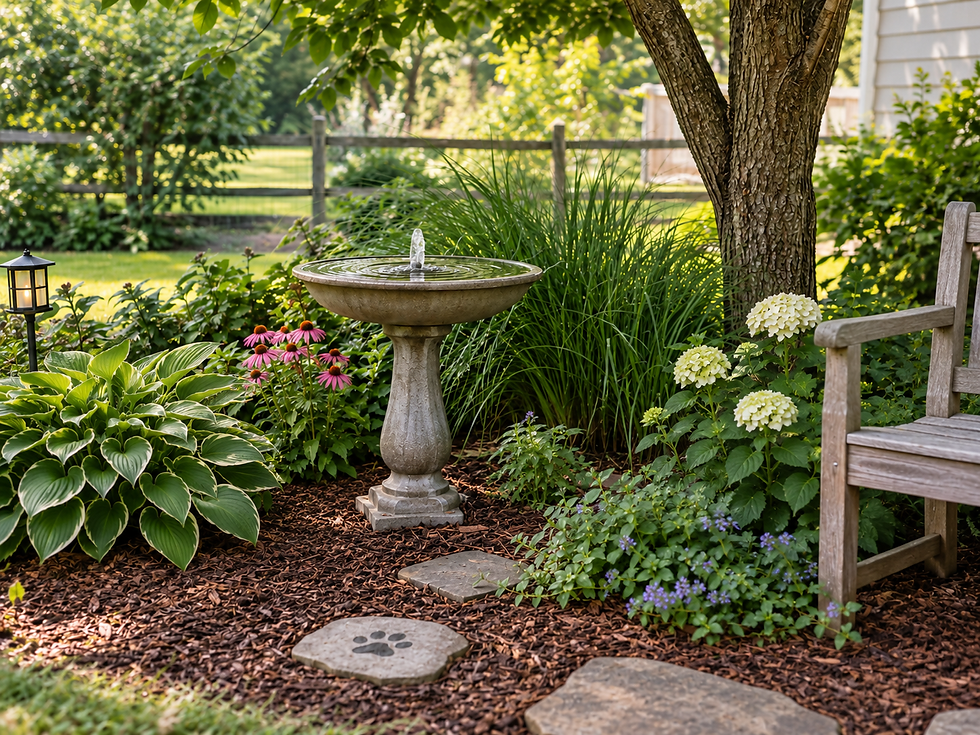
Birdbath fountains
The sound of flowing water can help soften traffic noise and make a small garden feel more secluded.
A fountain can also become a visual focal point.
Place it near a bench, memorial stone, planter, or framed photo area so that the sound becomes part of the space rather than feeling like a separate decoration.
A small fountain, birdbath, or other water feature can add another gentle layer of movement and sound. Read our guide to Adding Water to a Pet Memorial Garden for more ideas.

3. Encourage Birds to Visit
You don't have to add an artificial sound source.
Sometimes the best sounds come from the garden itself.
Birdsong can make a memorial garden feel active and connected to nature.
You may be able to attract more birds by including:
Native flowering plants
Berry-producing shrubs
Birdbaths
Bird feeders
Small trees
Dense shrubs for shelter
Native plants can be especially useful because they support local insects and wildlife.
Just remember that bird activity varies by location and season, so the sound will naturally change throughout the year.
4. Plant Ornamental Grasses
Ornamental grasses are easy to overlook when thinking about memorial gardens.
But many varieties create a soft rustling sound when the wind moves through them.
That subtle movement can add sound without making the garden noisy.
Depending on your space, you might use grasses:
Along the edge of a garden
Behind a memorial stone
In large containers
Near a seating area
Along a path
They also add movement, which can make the garden feel less static.
Choose varieties suited to your local climate and growing conditions.
5. Try Bamboo Wind Chimes
If traditional metal chimes feel too bright or sharp, bamboo chimes may be a better fit.
They tend to produce lower, softer sounds.
That can work well if you want the memorial garden to feel calm and natural.
Bamboo chimes also visually blend well with:
Ferns
Grasses
Wood benches
Stone
Garden paths
Natural planting styles
They can be especially nice in a shaded or woodland-inspired memorial space.
6. Add a Small Bell
A single bell can be more subtle than a full set of wind chimes.
You could attach a small bell to:
A garden stake
Shepherd's hook
Memorial ornament
Trellis
Fence
Hanging planter
Because the bell may only ring occasionally, the sound can feel more noticeable when it happens.
If you prefer a very quiet garden, this may be enough.
7. Let the Plants Create Sound
Plants can contribute more sound than people realize.
Leaves rustling in the wind, seed heads brushing against one another, and grasses moving together all add quiet background sound.
Plants with larger leaves may create more noticeable movement.
You could also place the memorial garden near an existing tree or shrub rather than trying to create every sound artificially.
A garden does not have to be completely silent to feel peaceful.
Sometimes natural movement is what gives it character.

8. Add a Gravel or Stone Path
Sound can also come from movement through the garden.
A gravel path creates a soft crunching sound as you walk.
This can make approaching the memorial area feel more intentional.
Even a very small path can work.
For example:
A few feet of pea gravel
Stepping stones surrounded by gravel
A curved path leading to a bench
Decorative stone around a memorial marker
The sound of footsteps can become part of the ritual of visiting the space.
9. Use a Birdbath
A birdbath can add both visual interest and natural sound.
Birds may visit to drink or bathe, creating movement and occasional splashing.
If you add a solar bubbler or small fountain attachment, you can also introduce the sound of moving water.
This can be a nice option if you want one feature to serve several purposes:
Decoration
Wildlife support
Water movement
Sound
Place it where you can see it from your seating area if possible.
10. Create a Sound Corner
You don't need to spread sound features throughout the entire garden.
Instead, create one small sound-focused area.
For example, you might place together:
A wind chime
Small fountain
Ornamental grass
Bench
Memorial stone
That gives you one place where sound, movement, and remembrance come together.
This can work especially well in a small yard.
Think About the Type of Sound You Want
Not every sound feels peaceful to every person.
Before adding anything, think about what you actually enjoy hearing.
Do you prefer:
Soft water
Deep wind chimes
Light bells
Birds
Rustling plants
Almost complete silence
There is no right answer.
A memorial garden should feel personal.
If loud metal chimes annoy you, don't add them just because they seem appropriate.
If water sounds help you slow down, build around that instead.
Avoid Adding Too Many Sounds at Once
It can be tempting to add:
Wind chimes
Bells
Fountain
Bird feeder
Multiple hanging ornaments
all in one small area.
But too many sounds can compete with each other.
A quieter approach often works better.
Try choosing one main sound and one natural background element.
For example:
Fountain + birds
or:
Wind chime + ornamental grasses
or:
Bamboo chime + rustling leaves
You can always add more later.
Use Sound as Part of a Memorial Ritual
Sound can also become part of a small remembrance ritual.
You might:
Sit near the fountain for five minutes
Listen to the wind chimes while thinking about your pet
Ring a small bell on an anniversary
Sit quietly and notice the birds
Walk slowly along the garden path
Light a candle nearby if it is safe to do so
The point does not have to be elaborate.
It can simply give you something to return to.
Match the Sound to Your Pet's Personality
You can also choose sound based on what reminds you of your pet.
For example:
If your dog loved sitting outside, you might choose birds and rustling grasses.
If your cat loved watching birds from a window, a birdbath may feel especially fitting.
If your pet was calm and quiet, a small fountain may suit the space.
If they were playful, lighter chimes may feel more natural.
This can make the memorial garden feel less generic and more connected to who they were.
Add Sound to a Small Memorial Garden
You don't need a large backyard.
Sound can work in:
Balcony gardens
Patio containers
Small flower beds
Porch memorials
Courtyard gardens
A single small wind chime or tabletop fountain may be enough.
Even one sensory detail can change how a space feels.
Make the Garden Multi-Sensory
Sound is only one part of the experience.
You can also include:
Sight: flowers, stones, memorial signs, photos
Smell: lavender, rosemary, mint, fragrant flowers
Touch: smooth stones, leaves, bark, wood
Sound: chimes, water, birds, moving grasses
Together, these elements can make the memorial garden feel more immersive.
You are not just looking at the garden.
You are experiencing it.
Flowers can bring both color and symbolism to a memorial space. For more ideas on what to plant, see our guide to the Best Flowers and Plants for a Pet Memorial Garden, including options for different garden styles and growing conditions.
If you are still deciding how you want the entire space to look, our Ultimate Guide to Pet Memorial Gardens includes ideas for choosing a location, adding meaningful decorations, selecting plants, and creating a garden that feels personal to your pet.
A Memorial Garden Doesn't Have to Be Silent
There is something meaningful about a garden that moves and changes.
The wind shifts.
A chime sounds.
Water flows.
Birds arrive and leave.
Leaves rustle.
Those small sounds can help a memorial garden feel like a living space rather than a static display.
You don't need to add everything.
Choose one sound that feels right.
Then let the rest of the garden grow around it.
Sometimes remembrance is quiet.
Sometimes it sounds like water, wind, birds, or one small chime moving in the breeze.

Comments