


The Ultimate Guide to Pet Memorial Gardens: Meaningful Ways to Honor a Beloved Dog or Cat
Losing a pet can leave an emptiness that is difficult to describe. Their bed may be gone, their food bowl may be put away, and the familiar sounds of their footsteps may no longer fill the house, but the love you shared remains.
A pet memorial garden can provide a peaceful place to hold that love.
Whether you create a small container garden on a balcony, dedicate a corner of your backyard, or plant a single flower beside a memorial stone, the space can become somewhere to remember, reflect, and feel close to your pet.
This guide will help you plan a meaningful pet memorial garden, choose plants and decorations, personalize the space, and care for it through the changing seasons.

What Is a Pet Memorial Garden?
A pet memorial garden is a dedicated outdoor or indoor space created in memory of a beloved animal.
It may include flowers, shrubs, stones, plaques, photographs, statues, wind chimes, or other items connected to your pet. Some families create elaborate garden areas, while others choose a single planter or tree.
There is no required size, style, or budget.
The most important part is that the space feels comforting and reflects the relationship you shared.
A pet memorial garden can be created for:
A dog or cat
A rabbit, bird, horse, or other companion animal
More than one pet
A childhood pet
A recently lost pet
A pet who passed many years ago
A foster pet or rescue animal who left a lasting impact
You do not need to create the garden immediately after your loss. Some people find comfort in planning right away, while others need months or years before they feel ready.
Why Create a Memorial Garden for a Pet?
Grief can make people feel as though they need somewhere for their love to go. A memorial garden provides a physical place where that love can continue to be expressed.
It can become a place to:
Sit quietly and remember your pet
Reflect on favorite memories
Write in a grief journal
Celebrate your pet’s birthday or adoption anniversary
Mark the anniversary of their passing
Display a memorial item
Plant flowers in their honor
Talk to your pet when you miss them
Create new rituals of remembrance
Gardening itself can also offer a gentle routine during grief. Watering plants, pulling weeds, or watching new growth appear can provide small moments of structure when life feels unfamiliar.
A memorial garden does not remove grief. It simply creates a peaceful place where grief and love can exist together.
How to Choose the Right Location
Before purchasing plants or decorations, spend time choosing the location for your memorial garden.
The best location depends on your available space, your pet’s personality, and how you would like to use the garden.
Consider Your Pet’s Favorite Place
Did your dog sleep beneath a particular tree? Did your cat enjoy watching birds from a certain window? Did your pet have a favorite sunny corner of the yard?
Creating the garden near a meaningful location can make it feel especially personal.
You might choose:
A spot near your pet’s favorite tree
The corner where they liked to rest
A place beside the porch
An area near a walking path
A section visible from a favorite window
A quiet place away from household activity
Think About Sunlight and Soil
Plants have different sunlight and soil requirements. Observe the area for several days before deciding what to plant.
Notice whether it receives:
Full sun
Partial sun
Mostly shade
Morning or afternoon light
Good drainage
Excess moisture after rain
Choosing plants that match the conditions will make the garden easier to maintain.
Choose a Place You Can Visit Comfortably
The memorial garden should feel accessible rather than burdensome.
A location close to the house may be best if you want to visit it frequently. A more secluded corner may feel right if you want privacy and quiet.
There is no wrong choice.
Types of Pet Memorial Gardens
A memorial garden can take many forms. You can choose the style that works best for your home, budget, mobility, and available space.
Backyard Memorial Garden
A backyard garden offers room for plants, seating, memorial stones, and decorative features.
You might create a small flower bed, outline the area with stones, and add a bench or chair where you can sit.
Memorial Tree Garden
Planting a tree can symbolize life, strength, and continuing love.
You can place flowers, stones, or a plaque around the base of the tree. Keep the tree’s mature size and root system in mind when choosing a location.
Container Memorial Garden
A container garden is a flexible option for patios, balconies, porches, rented homes, and small spaces.
Choose a large planter and fill it with flowers, herbs, or a small shrub. Add a personalized garden stake, painted rock, or waterproof photo ornament.
Container gardens can also move with you if you relocate.
Indoor Memorial Garden
An indoor memorial garden may include houseplants, succulents, a small tabletop fountain, or a terrarium.
Place the garden near your pet’s photograph, collar, urn, paw print, or memory box.
When choosing indoor plants, confirm that they are safe around any pets who currently live in your home.
Window Box Memorial Garden
A window box can become a simple living memorial that you see each day.
It may be especially meaningful when placed outside a window where your pet once liked to sit.

Community or Shared Memorial Garden
Some veterinary offices, animal shelters, rescue organizations, cemeteries, and community spaces offer memorial gardens.
You may be able to sponsor a plant, purchase an engraved brick, dedicate a bench, or add your pet’s name to a shared memorial.
How to Plan a Pet Memorial Garden
A thoughtful plan can make the project feel less overwhelming.
Step 1: Decide How You Want the Space to Feel
Before choosing specific items, think about the atmosphere you want to create.
Would you like the garden to feel:
Peaceful
Cheerful
Natural
Colorful
Private
Spiritual
Playful
Simple
Formal
Wild and free
Your answer can guide every other decision.
A playful dog might inspire bright flowers and a colorful garden flag. A quiet senior cat might inspire soft greenery, white flowers, and a shaded bench.
Step 2: Choose a Size
Your memorial may be as small as a single pot or as large as a landscaped section of your yard.
Start with what feels manageable. You can always expand the garden later.
Step 3: Set a Budget
Memorial gardens do not need to be expensive.
A meaningful space can be created with:
Plants divided from your existing garden
A hand-painted stone
A reused planter
A homemade garden sign
A simple solar light
A chair you already own
Decide which elements matter most and add others gradually.
Step 4: Choose a Focal Point
A focal point gives the garden a central feature.
Possible focal points include:
An engraved memorial stone
A tree
A statue
A photograph in a weatherproof frame
A personalized garden stake
A bench
A birdbath
A fountain
Your pet’s name displayed on a sign
A large planter
Step 5: Select Plants
Choose plants based on the amount of sunlight, your climate, and the level of maintenance you prefer.
You may want flowers that bloom around your pet’s birthday or the season when they entered your life.
Step 6: Add Personal Details
This is what transforms a general garden into your pet’s garden.
Include colors, objects, symbols, or plants that remind you of their personality.
Step 7: Create a Place to Pause
Even a small garden can include a spot where you can stand, sit, or kneel.
Add a chair, bench, stepping stone, cushion, or small cleared area where you can spend time comfortably.
Meaningful Plants for a Pet Memorial Garden
Plants can be chosen for their appearance, symbolism, fragrance, or connection to a memory.
Forget-Me-Nots
Forget-me-nots are often associated with remembrance and enduring connection. Their small blue flowers can add a gentle touch to a memorial garden.
Rosemary
Rosemary has long been connected with remembrance. It can be grown in garden beds or containers and may be incorporated into memorial rituals or keepsakes.
Roses
Roses can symbolize love and devotion. You might choose a color connected to your pet’s collar, personality, or favorite blanket.
Lavender
Lavender can help create a soft, calming atmosphere. Its fragrance may make the garden feel especially peaceful.
Sunflowers
Sunflowers may be appropriate for an energetic, joyful, or outgoing pet. Their height and brightness can make the memorial feel like a celebration of life.
Daisies
Daisies have a simple, cheerful appearance and may represent innocence, loyalty, and uncomplicated love.
Hydrangeas
Hydrangeas create large clusters of blooms and can make a memorial space feel full and established. They work well as a backdrop for stones, plaques, or garden statues.
Wildflowers
Wildflowers can be a meaningful choice for a pet who loved running, exploring, hiking, or spending time outdoors.
A wildflower area can feel relaxed, natural, and full of movement.
Evergreen Plants
Evergreen shrubs and ground covers provide color throughout the year. They can symbolize a love that remains present through every season.
Native Plants
Native plants are often well suited to local growing conditions and can support birds, bees, and butterflies.
Attracting wildlife may bring a sense of life and movement to the memorial garden.
Before planting, confirm that your choices are appropriate for your climate and safe for any animals who may access the area.
Plants Connected to Your Pet’s Life
Symbolism does not have to come from traditional meanings.
You may choose plants because:
Their color matches your pet’s collar
They grew near a favorite walking path
Your pet liked to smell them
They remind you of a vacation you took together
They bloom during your pet’s birthday month
They have the same name as your pet
Their texture reminds you of your pet’s coat
They attract butterflies your cat loved watching
They grow near the bench where your dog rested
Personal memories are often more meaningful than formal symbolism.
Pet Memorial Garden Decoration Ideas
Decorations can help tell your pet’s story.
Engraved Memorial Stone
A memorial stone can include your pet’s:
Name
Birth year
Adoption date
Date of passing
Paw print
Portrait
Favorite saying
Short memorial quote
It can be professionally engraved or created at home with outdoor paint and sealant.
Personalized Garden Sign
A garden sign might say:
Harry’s Garden
Piper’s Peaceful Place
River’s Corner
Forever Loved
Always Beside Us
You Left Paw Prints on Our Hearts
Run Free, Sweet Friend
Loved Beyond Words
Our Favorite Hello and Hardest Goodbye
Painted Memorial Rocks
Paint smooth stones with your pet’s name, paw prints, hearts, flowers, or small images connected to favorite memories.
Family members and children can each decorate a stone.
Paw-Print Stepping Stones
A stepping stone can include a paw-print design, mosaic, name, or meaningful date.
Several stones can create a short pathway leading into the garden.
Pet Statue or Silhouette
Choose a statue that resembles your pet’s breed or species, or use a simple dog, cat, bird, or paw-print silhouette.
Wind Chimes
Wind chimes can add gentle sound to the garden.
Some people find comfort in hearing them and imagining the sound as a small reminder of their pet.
Solar Lights
Solar lights allow the garden to remain visible in the evening.
They may be especially meaningful on anniversaries, birthdays, or days when you want to spend quiet time outside after sunset.
Bird Feeder or Birdbath
A bird feeder or birdbath can bring activity into the space.
This may feel fitting for pets who enjoyed watching birds or sitting outdoors.
Garden Flag
A personalized garden flag can display your pet’s name, portrait, paw prints, or a remembrance message.
Outdoor Photo Frame
Use only a frame designed for outdoor conditions, or place the photo in a covered area protected from rain and direct sunlight.
You might also transfer your pet’s image onto a weather-resistant sign or tile.
Decorative Fence or Border
Define the garden using:
Small stones
Bricks
Wooden edging
A miniature fence
Seashells
Reclaimed garden materials
A border can make even a small memorial area feel intentional.
Personal Items to Include
You may want to incorporate an item that belonged to your pet.
Possible items include:
A collar or tag displayed in a protected frame
A favorite toy placed in a weatherproof memory box
A replica of a favorite ball
A food or water bowl used as a planter
A leash wrapped around a decorative hook
A blanket pattern recreated as a garden flag
A name tag attached to a wind chime
A small portion of ashes placed beneath a plant, when permitted and appropriate
A clay paw print displayed in a covered area
Original items may fade or deteriorate outdoors. Consider using replicas or placing precious keepsakes in weatherproof containers.
Pet Memorial Garden Ideas Based on Personality
Your pet’s personality can inspire the design.
For a Playful Pet
Use bright flowers, colorful pinwheels, a ball-shaped ornament, or a cheerful garden flag.
For a Gentle Pet
Choose soft colors, delicate flowers, quiet wind chimes, and a comfortable seat.
For an Adventurous Pet
Add natural stones, wildflowers, logs, grasses, or items connected to hiking and travel.
For a Water-Loving Pet
Include a small fountain, blue flowers, smooth river stones, or a water bowl transformed into a planter.
For a Sun-Loving Pet
Create the garden in a warm, sunny location with yellow, orange, or red flowers.
For a Pet Who Loved Watching Wildlife
Add bird feeders, butterfly-friendly plants, or a birdbath.
For a Senior Pet
Create a quiet, established-looking garden with soft greenery, a bench, and a plaque honoring the many years you shared.
Small Pet Memorial Garden Ideas
A meaningful memorial does not require a large yard.
Small-space ideas include:
A single personalized planter
A tabletop succulent garden
A hanging basket
A window box
A small herb garden
A mini indoor fountain
A terrarium
A shelf with plants and memorial objects
A planter made from your pet’s bowl
A small collection of painted stones
A balcony container with solar lights
A memorial wreath displayed outdoors
A single flowering shrub
A bonsai or miniature tree
A small pot that moves with you from home to home
A small memorial can be just as meaningful as a large one.
DIY Pet Memorial Garden Projects
Creating something by hand can help make the space feel deeply personal.
Memory Stone
Paint your pet’s name and paw print on a smooth outdoor stone. Add a short message and protect it with an appropriate exterior sealant.
Paw-Print Flower Pot
Decorate a planter with painted paw prints, your pet’s name, or colors associated with them.
Collar Wind Chime
Attach a replica tag or protected collar charm to a handmade wind chime.
Avoid placing irreplaceable items outdoors where they may be damaged.
Memorial Garden Marker
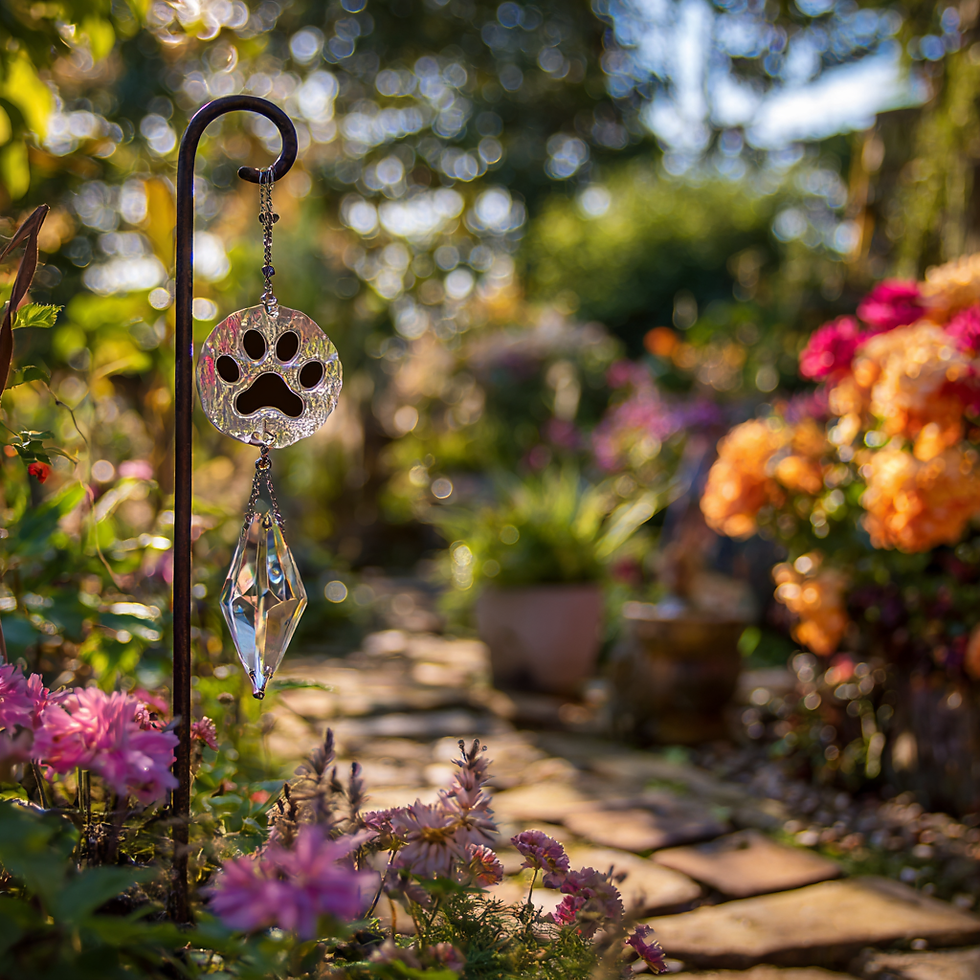
Use a wooden or metal garden stake to display your pet’s name and a short phrase.
Memory Jar for the Garden
Place written memories inside a tightly sealed, weather-resistant container kept in a covered area.
You can add a new memory on birthdays, anniversaries, or whenever one comes to mind.
Mosaic Stepping Stone
Create a stepping stone using mosaic pieces in your pet’s favorite colors. Include a name, paw-print shape, or heart.
Painted Bowl Planter
Turn a clean pet bowl into a small planter for herbs, flowers, or succulents.
Add drainage holes when needed and make sure the container is suitable for the plant you choose.
Pet Memorial Garden Quotes
A short quote can be added to a plaque, stone, sign, or garden flag.
Consider these options:
Forever loved, never forgotten.
You left paw prints on our hearts.
Always beside us.
Your love still grows here.
In this garden, your memory blooms.
Run free, sweet friend.
Loved for a lifetime and remembered forever.
Gone from our sight, but never from our hearts.
Every flower carries a memory of you.
Until we meet again.
Your paws may be gone, but your love remains.
A loyal companion, a beautiful soul, a forever friend.
This garden grows with the love you left behind.
You made our lives more beautiful.
The smallest paws can leave the deepest marks.
Your memory lives in every season.
Here grows a love that never ends.
Thank you for every walk, every cuddle, and every day.
Still loved. Still missed. Always remembered.
You were home to us.
How to Use the Garden as Part of Your Grief Journey
The memorial garden can become more than a decorative space. It can support personal rituals and reflection.
Write in a Journal
Bring a grief journal into the garden and write about:
A memory that surfaced today
Something you miss
Something your pet taught you
A moment that made you laugh
What you would say to your pet
How your grief has changed
A detail you never want to forget
Read a Letter to Your Pet
Write a letter and read it quietly in the garden.
You may keep the letter in a memory box, place it beneath a stone, or safely dispose of it as part of a personal ritual.
Celebrate Special Dates
Visit the garden on:
Your pet’s birthday
Their adoption or gotcha day
The anniversary of their passing
A favorite holiday
The first day of a meaningful season
You might place flowers, light a battery-operated candle, or share a favorite story.
Add Something Each Year
Allow the garden to grow over time.
Each year, add a new plant, stone, ornament, or written memory. The garden can evolve alongside your grief.
Invite Family Members to Participate
Each person may choose a flower, decorate a stone, write a message, or share a memory.
This can be especially helpful when members of the household grieve differently.
Spend Time Without an Agenda
You do not always need to write, speak, or perform a ritual.
You may simply sit in the garden and be present.
Creating a Memorial Garden With Children
Children may benefit from having a simple, creative way to participate in remembering a pet.
Invite them to:
Paint a rock
Choose a flower
Draw a picture
Write a short note
Decorate a garden marker
Pick a favorite photograph
Share a funny story
Help water the plants
Add a small toy or symbol
Name a new plant after the pet
Avoid telling children how they should feel. Some may cry, some may ask practical questions, and others may return quickly to play.
All of these responses can be part of grief.
Creating a Memorial for More Than One Pet
A shared memorial garden can honor every animal who has been part of your family.
You might create:
One stone for each pet
Separate planters
A pathway of name markers
A central tree surrounded by smaller memorials
A plaque listing every name
Different flowers representing each personality
A shared garden sign with individual tags
A memory wall beside the garden
Leave space for the memorial to grow over time if that feels right for your family.
What to Do When You Move
People sometimes hesitate to create a memorial garden because they may not live in the same home forever.
You can make the memorial portable by using:
Containers
Garden statues
Personalized stones
Small trees in large pots
Garden flags
Wind chimes
Movable benches
Decorative stakes
Potted perennial plants
You may also take cuttings, divide a plant, collect seeds, photograph the garden, or bring one memorial stone to your next home.
The love connected to the garden is not limited to one address.
Seasonal Pet Memorial Garden Ideas
A memorial garden can offer comfort throughout the year.
Spring
Plant new flowers
Clean the memorial stone
Add fresh mulch
Place a new garden marker
Start a butterfly garden
Write about new beginnings
Summer
Add solar lights
Sit outside with a journal
Plant colorful annuals
Place fresh flowers near the memorial
Add a small water feature
Fall
Plant spring-blooming bulbs
Collect leaves for a scrapbook
Add pumpkins or seasonal decorations
Reflect on how your grief has changed
Prepare delicate items for winter storage
Winter
Add an outdoor-safe wreath
Use evergreen branches
Place a weatherproof lantern nearby
Decorate a small indoor memorial planter
Display a photograph beside a houseplant
Plan additions for the coming spring
How to Care for a Pet Memorial Garden
A memorial garden should bring comfort, not pressure.
Choose a level of maintenance that fits your energy, time, and physical ability.
Helpful steps include:
Watering according to plant needs
Removing weeds
Replacing faded decorations
Cleaning plaques and stones
Pruning plants when needed
Adding mulch
Bringing fragile items indoors during severe weather
Checking outdoor lights
Photographing the garden during different seasons
Replacing plants that do not thrive
A plant dying does not carry a deeper meaning and does not reflect the strength of your love. Gardens change, and it is completely acceptable to replace plants or redesign the space.
Common Mistakes to Avoid
Creating More Than You Can Maintain
Start small. A single planter may be more comforting than a large space that becomes stressful to care for.
Choosing Plants Without Checking the Conditions
A beautiful plant may struggle if it does not match the sunlight, soil, or climate.
Placing Irreplaceable Keepsakes Outdoors
Rain, sunlight, insects, and temperature changes can damage collars, photographs, toys, and clay paw prints.
Use replicas or protective displays whenever possible.
Forgetting About Other Pets
Some plants, fertilizers, mulches, and garden products may be unsafe for animals.
Check anything that current pets may chew, lick, walk through, or ingest.
Expecting the Garden to Look Finished Immediately
A memorial garden can grow slowly. It may take several seasons before the space feels established.
Comparing Your Memorial to Someone Else’s
A large, professionally landscaped garden is not more meaningful than a single flower in a pot.
Your memorial only needs to feel right to you.
A Simple Pet Memorial Garden Plan
For an easy starting point, use this basic formula:
Choose a quiet location.
Add one meaningful plant.
Place a stone or sign with your pet’s name.
Add one personal symbol.
Create a comfortable place to pause.
Visit whenever you feel drawn to the space.
Allow the garden to grow gradually.
That is enough.
Pet Memorial Garden Checklist
Use this checklist while planning your space.
Garden Element | Questions to Consider |
Location | Is the area peaceful, accessible, and meaningful? |
Sunlight | How many hours of sunlight does the space receive? |
Garden size | Do you want a planter, small bed, or larger garden? |
Plants | Do they fit your climate and maintenance level? |
Pet safety | Are the plants and materials safe around current pets? |
Focal point | Will you use a stone, tree, statue, sign, or plaque? |
Personal items | Which colors, symbols, or memories represent your pet? |
Seating | Would a chair, bench, or stepping stone be helpful? |
Weather protection | Which items need to be covered or brought indoors? |
Long-term care | Can the garden be maintained without becoming stressful? |
Frequently Asked Questions About Pet Memorial Gardens
How big should a pet memorial garden be?
A pet memorial garden can be any size. It may be a single flowerpot, a small section of a yard, or a larger landscaped area. Choose a size that fits your space, budget, and ability to maintain it.
What should I plant in memory of my dog or cat?
Choose a plant that suits your garden conditions and feels personally meaningful. You might select a favorite color, a flower that blooms during your pet’s birthday month, an evergreen plant, a fragrant herb, or a native plant that attracts wildlife.
Can I create a pet memorial garden without a yard?
Yes. Use a balcony planter, window box, indoor houseplant display, tabletop garden, terrarium, or container placed near a sunny window.
Can I put my pet’s ashes in the garden?
Some people choose to bury or scatter cremated remains in a memorial garden. Rules may vary by property type, rental agreement, cemetery, and local requirements.
Cremated remains may also affect soil conditions when concentrated in one area, so consider speaking with the cremation provider, a local garden professional, or an appropriate local authority before proceeding.
What can I use instead of a memorial stone?
Alternatives include a personalized planter, garden stake, plaque, birdbath, tree, statue, bench, wind chime, painted rock, or garden flag.
How soon after losing a pet should I create the garden?
There is no correct timeline. You may begin immediately, wait for a meaningful date, or create the garden years later. Start when the idea feels comforting rather than overwhelming.
What happens if a memorial plant dies?
Plants can fail for many ordinary reasons, including weather, soil conditions, disease, drainage, and transplant stress. It does not mean anything about your pet or your relationship. You can replace the plant, choose a different variety, or redesign that part of the garden.
Can a pet memorial garden be a happy place?
Yes. A memorial garden does not need to feel sad or formal. It can be bright, playful, colorful, and filled with details that celebrate your pet’s personality.
Should every family member help design the garden?
Participation should be optional. Some people may want to plant flowers or decorate stones, while others may prefer to remember the pet privately. Different grief responses can coexist.
Can I create a memorial garden for a pet who died many years ago?
Absolutely. Love and grief do not follow a deadline. Creating a garden years later can still be meaningful and healing.
A Living Tribute to the Love You Shared
A pet memorial garden is not only a place that marks a loss. It is a space that honors a life.
Every flower, stone, leaf, and small decoration can represent a walk you took, a quiet morning together, a favorite game, or the comfort of having your pet beside you.
Your garden does not need to be perfect, elaborate, or completed all at once.
Begin with one plant, one stone, or one small corner.
Let the space grow gently, just as your memories continue to grow and change. Over time, the garden can become a living reminder that although your pet is no longer physically present, the love you shared is still rooted deeply in your life.

Comments