


Best Flowers and Plants for an Outdoor Pet Memorial Garden: Meaning, Scent, and Lasting Beauty
Creating an outdoor memorial garden for a beloved pet is about more than choosing flowers that look beautiful.
The plants themselves can become part of the memorial.
You might choose rosemary because of its long association with remembrance. You might plant forget-me-nots because their name says exactly what you are feeling. A fragrant rose might remind you of a garden you walked past together, while sunflowers could reflect the happy personality of a dog who seemed to bring energy everywhere they went.
There is no single flower that belongs in a pet memorial garden. The best choices are often the ones that connect to memory, meaning, scent, color, season, or personality.
And sometimes the most meaningful plant has no traditional symbolism at all.
If your dog always stopped to sniff the same flowering bush on your walks, that may be exactly what belongs in the garden.
How to Choose Plants for a Pet Memorial Garden
Before heading to the garden center, think about what you want your memorial garden to feel like.
Do you want a quiet, calming place where you can sit?
A colorful garden that celebrates your pet's personality?
A garden filled with fragrance?
A garden that attracts butterflies and birds?
Or something simple that returns year after year without requiring much maintenance?
Your answers can help guide what you plant.
You can also mix several kinds of plants rather than trying to find one perfect memorial flower.
For example:
One plant chosen for remembrance
One fragrant plant connected to scent and memory
A flowering perennial that returns each year
Flowers that attract butterflies, bees, or birds
A plant in your pet's favorite spot or near a memorial stone
Seasonal flowers that give you something new to notice throughout the year
Plant fragrance can be especially meaningful. Scent is strongly connected with memory, and familiar smells can bring back associations with particular places and experiences.
The Royal Horticultural Society notes that smells can be highly evocative and can transport us back to memories and places.
Best Flowers and Plants for an Outdoor Memorial Garden
Plant | Meaning or Connection | Fragrance | Why It Works in a Memorial Garden |
Rosemary | Remembrance | Strong herbal scent | Evergreen in warmer climates and historically associated with remembrance |
Forget-Me-Nots | Remembrance and enduring love | Little fragrance | Small blue flowers with one of the most fitting names for a memorial |
Roses | Love | Many varieties are fragrant | Available in many colors, sizes, and growing habits |
Lilac | Memory, nostalgia and spring | Strongly fragrant | Its scent can become an annual reminder when it blooms |
Sage | Reflection and wisdom | Aromatic foliage | Adds fragrance and texture and can attract pollinators |
Sunflowers | Warmth, happiness and devotion | Mild | A beautiful choice for remembering a cheerful or energetic pet |
Zinnias | Lasting affection and remembrance in traditional flower language | Mild | Colorful, easy to grow and excellent for summer color |
Snapdragons | Grace and strength in traditional flower language | Light | Adds height and color to a garden |
Asters | Love and remembrance in traditional symbolism | Mild | Often bloom later in the season and support pollinators |
Camellias | Admiration and affection | Varies | Evergreen foliage in suitable climates with beautiful flowers |
Coreopsis | Cheerfulness | Mild | Bright perennial flowers that work well in natural garden designs |
Ornamental grasses | Movement and continuity | None | Add soft movement and sound when the wind blows |
Flower meanings have varied across cultures and historical periods, so think of traditional symbolism as inspiration rather than a rule. Smithsonian Gardens notes that flower meanings have changed over time and can differ among cultures.

1. Rosemary: A Plant for Remembrance
Rosemary may be one of the most meaningful plants you can add to a memorial garden.
It has been associated with remembrance for centuries and historically appeared in ceremonies connected with both love and death. Penn State Extension notes rosemary's traditional associations with remembrance, love, fidelity, and friendship.
That history makes it particularly suited to a garden created around memory.
There is also something sensory about rosemary. Run your hand gently over the leaves and the fragrance immediately becomes noticeable.
That creates an opportunity for a small ritual.
When you visit the garden, touch the rosemary, breathe in the scent, and remember one moment with your pet.
Rosemary is also listed by the ASPCA as non-toxic to dogs and cats.
One thing to remember is that rosemary prefers warmer conditions and may not survive winter outdoors in colder climates. In those areas, you could grow it in a container and bring it to a protected location during winter.
2. Forget-Me-Nots: Perhaps the Most Literal Memorial Flower
It is difficult to find a flower whose name fits a memorial garden more naturally than the forget-me-not.
These tiny blue flowers have been associated with love and remembrance since at least the Middle Ages.
They can work especially well around:
A memorial stone
A garden marker
A small statue
A birdbath
The base of a larger memorial plant
Because the flowers are small, they can create a softer memorial than a large centerpiece plant.
Rather than announcing itself, a patch of forget-me-nots can feel like a quiet reminder:
You are still remembered.

3. Roses: A Living Symbol of Love
Sometimes the simplest meaning is enough.
You loved them.
That alone makes a rose appropriate.
Roses have long been connected with love in traditional flower symbolism, and different colors have been given different meanings throughout history.
For a memorial garden, however, you do not have to follow traditional color meanings.
Instead, choose a rose because:
It was your favorite color.
It reminds you of your pet's coloring.
You love its fragrance.
It blooms near an important anniversary.
Its personality somehow reminds you of theirs.
A fragrant rose beside a garden bench can also turn scent into part of the memorial experience.
The ASPCA lists roses as non-toxic to dogs and cats, although the thorns themselves can still cause injuries.
4. Lilacs: Let Scent Become Part of the Memory
If you want fragrance to play a major role in your memorial garden, consider planting something that produces a noticeable seasonal scent.
Lilacs are especially powerful because their fragrance arrives for a relatively short period each year.
That can turn their blooming season into something meaningful.
One spring you may suddenly walk outside, smell the lilacs, and realize:
They're blooming again.
Over time, the scent itself may become connected with your pet and your memorial garden.
This is one reason a memorial garden does not have to be completely focused on visual beauty.
Smell, sound, touch, and movement can all contribute to how the space feels.
5. Sage: A Sensory Addition to the Garden
Sage is another option if you like the idea of a garden that can be touched as well as viewed.
The foliage releases fragrance when handled, creating another sensory element.
It also works nicely alongside stones, grasses, and flowering plants if you prefer a softer, more natural-looking memorial garden rather than a formal flower bed.
Some Salvia species can also provide nectar for pollinators. The ASPCA includes sage among plants considered non-toxic to dogs and cats in its pet-safe wildlife gardening recommendations.
6. Sunflowers: For the Pet Who Was Pure Sunshine
Not every memorial garden has to be quiet and subdued.
If your pet was energetic, silly, playful, or simply seemed to make everything brighter, sunflowers may feel much more appropriate than a traditional white memorial flower.
Their height and cheerful appearance make them particularly good for a garden designed around celebrating a life rather than only mourning a loss.
The ASPCA lists sunflower species among plants that are non-toxic to dogs and cats.
You could even collect seeds at the end of the season and plant some again the following year.
That annual act can become part of your memorial ritual.
7. Zinnias: Color That Can Return Every Summer
Zinnias are a good choice when you want plenty of color without creating an overly formal garden.
They come in shades of:
Pink
Red
Orange
Yellow
White
Purple
Mixed colors
Plant one color or create a cheerful mix.
Zinnias are also listed by the ASPCA as non-toxic to dogs and cats.
They work particularly well in memorial gardens designed to attract butterflies and other pollinators.
8. Snapdragons: For Height and Personality
Snapdragons can add vertical interest to a memorial garden and work particularly well behind smaller flowers.
You could choose them simply because you love their shape or because their colors remind you of your pet.
They are also a useful option for gardens that living pets may have access to, because garden snapdragons are listed by the ASPCA as non-toxic to dogs and cats.
9. Asters: Extend the Garden Into Fall
One of the nicest ways to design a memorial garden is to choose plants that do not all bloom at once.
Asters can add color later in the growing season, when many summer flowers are beginning to fade.
That means the garden continues changing.
Instead of creating something that looks exactly the same every month, you experience different parts of it throughout the year.
ASPCA also includes asters among plants considered non-toxic to dogs and cats.

10. Plants That Attract Butterflies and Birds
For some people, wildlife becomes one of the most comforting parts of a memorial garden.
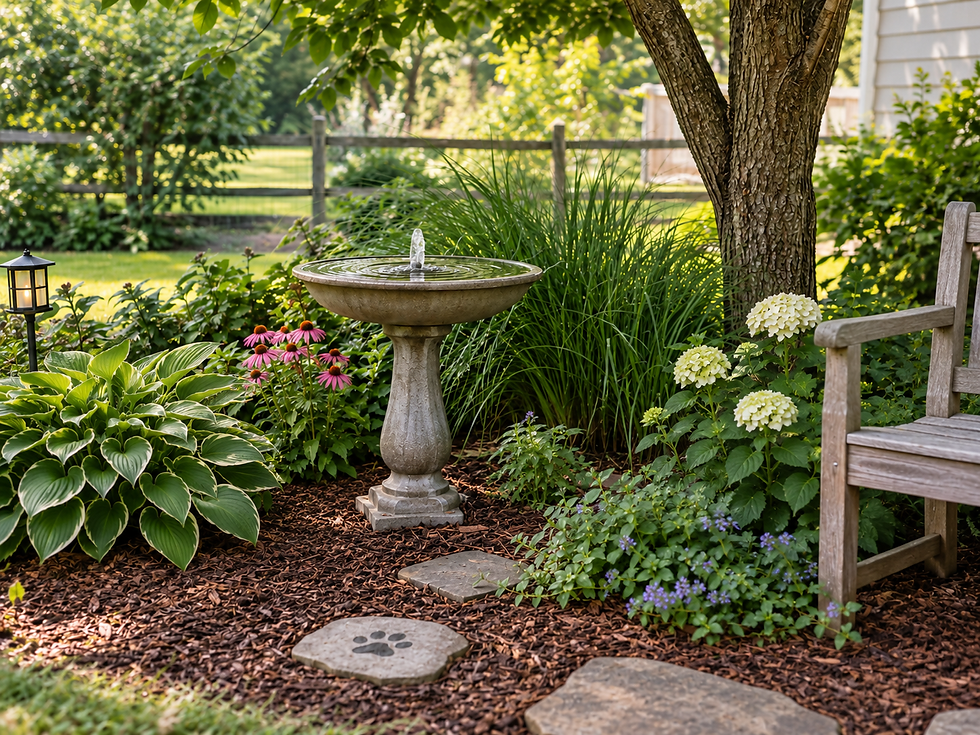
A butterfly landing near a memorial stone or a bird stopping at a nearby birdbath can create a quiet moment of connection.
You do not need to attach a specific spiritual meaning to those visits for them to matter.
They simply make the garden feel alive.
Consider mixing flowering plants with:
A birdbath
A shallow water source
Native flowering plants
Seed-producing plants
A small tree or shrub
Pollinator-friendly flowers
Native plants can be especially valuable because they help support wildlife adapted to your region. The ASPCA recommends checking local nurseries for native plants and notes that native species can provide food and habitat for butterflies, birds, beneficial insects, and other wildlife.
Don't Forget Texture and Movement
Flowers are only one part of a memorial garden.
Ornamental grasses can add movement as they sway in the wind.
A low evergreen can provide structure when flowers disappear for winter.
Soft foliage can introduce texture.
Groundcovers can grow around a memorial stone.
These plants may not have obvious symbolic meanings, but they can change the feeling of the space.
A garden that moves slightly in the breeze can feel very different from one made only from stones and permanent objects.
If you’re creating a larger space, see our guide to creating an outdoor pet memorial garden for ideas on layout, memorial features, plants, and meaningful additions.
Use Bloom Times to Make the Garden Change With the Seasons
Instead of planting everything for one big summer display, consider creating a garden
that changes throughout the growing season.
For example:
Spring: forget-me-nots and flowering shrubs
Early summer: roses and sage
Mid-summer: zinnias and sunflowers
Late summer into fall: asters and ornamental grasses
Exact flowering periods depend on your climate, plant variety, and growing conditions.
Having different plants appear throughout the year gives you reasons to return to the garden and notice what has changed.
Consider a Plant Connected Specifically to Your Pet
Traditional flower meanings can be beautiful, but personal meaning is usually more powerful.
Maybe your dog loved lying underneath one particular tree.
Maybe your cat watched butterflies from the window.
Maybe your pet loved sniffing lavender on your walks.
Maybe their collar was purple.
Maybe their name was Daisy, Rosie, Lily, or Poppy.
Those details matter.
A memorial plant does not have to symbolize grief according to a Victorian flower dictionary.
It only has to mean something to you.
A Note About Pet-Safe Memorial Gardens
If other dogs or cats will have access to the garden, plant selection deserves extra consideration.
Some beautiful garden plants can be harmful to animals when eaten. The ASPCA specifically warns about plants including azaleas, rhododendrons, oleander, foxglove, sago palms, and certain lilies. Some bulbs—including tulips, daffodils, hyacinths, and crocuses—can also cause problems if pets ingest them.
True lilies are particularly dangerous to cats and can cause severe kidney injury.
If pets can enter your memorial garden, check the exact species of every plant before planting it. Common names can sometimes refer to very different plants.
The ASPCA maintains a searchable database of plants that are toxic and non-toxic to dogs, cats, and horses.
Create a Small Scent Garden Within the Memorial Garden
You could also dedicate one small section specifically to fragrance.
Instead of filling it with many plants, keep it simple.
You might combine:
Rosemary + fragrant rose + sage
Place them somewhere you naturally pass when entering the garden.
Each time you brush against the foliage or stop to smell a flower, you create another sensory connection with the space.
For someone grieving a pet, that can make visiting the memorial feel less like looking at a display and more like participating in a ritual.
Add Something Permanent Among the Plants
Plants change.
That is part of what makes them beautiful.
But you may also want one element that stays in place throughout every season.
Consider adding:
A memorial garden stake
An engraved stone
A small plaque
Your pet's name
A paw-print marker
Wind chimes
A suncatcher
A birdbath
A small bench
A solar light
A favorite quote
Then allow the plants to grow around it.
Eventually, the permanent memorial and living garden begin to feel like one space.
The Best Memorial Garden Doesn't Have to Be Perfect
A memorial garden does not need professional landscaping.
It doesn't need ten varieties of flowers.
And it certainly doesn't need to be finished in one weekend.
You might start with one plant.
Plant a rose.
Add rosemary.
Place a stone nearby.
Then live with the space for a while.
Maybe next spring you add forget-me-nots.
Later, you might add a birdbath or wind chime.
Years from now, the garden may look completely different from the day you started it.
And perhaps that is part of its meaning.
Grief changes too.
The garden grows, flowers fade, plants return, birds visit, seasons change—and through all of it, the reason you created the garden remains.
You loved them. You remember them. And this small piece of the world still holds a place for them.

Comments