


Journal Prompts to Capture Your Pet’s Life Story: 50 Pet Memory Journal Prompts
Our pets become part of our lives in ways we don't always recognize until we look back. They shape our daily routines, fill our homes with personality, and give us countless little moments that eventually become treasured memories.
We remember the big things, like the day we brought them home, their first adventure, or a particularly memorable birthday. But some of the most meaningful memories are the ordinary ones. The familiar sound of their footsteps, the way they greeted us at the door, or the particular spot where they liked to sleep.

Using journal prompts to capture your pet's life story is a way to preserve those memories, from your first moments together to the little details that made them one of a kind.
Whether your pet is still by your side or you're remembering one who has passed away, these 50 pet memory journal prompts can help you tell their story in your own words.
You don't need to be an experienced writer or complete every question. A few sentences, a photograph, or even a short list of favorite memories can become a meaningful part of your pet's story.
If you’d prefer a simple place to start, you’ll find a free printable pet life story worksheet below.
Why Write Your Pet's Life Story?
Photographs capture what our pets looked like, but writing can preserve the things a photograph cannot always show.
A photograph of your dog sitting beside you might remind you that they always knew when you were having a difficult day. A picture of your cat sleeping in a sunny window might bring back the memory of how they followed the sunlight from room to room.
Writing these details down helps preserve the stories behind the photographs.
Creating a pet memory journal can also give you a personal way to:
Remember the little habits and quirks that made your pet unique.
Document important milestones and favorite experiences.
Preserve stories that you can share with family members.
Reflect on the relationship you shared and how it changed over time.
Create a lasting keepsake that you can return to whenever you want to feel connected to those memories.
For someone experiencing pet loss, journaling may also provide a gentle way to express thoughts and feelings that can be difficult to put into words.
There is no requirement to write about everything at once. Your pet's story can unfold over several days, weeks, or even years.
50 Pet Memory Journal Prompts to Capture Their Life Story
These prompts are organized into ten chapters, following the story of your pet's life and the relationship you shared.
You can work through them in order to create a chronological account or begin with whichever memory feels most meaningful today.
Chapter 1: The Beginning of Your Story

Every relationship has a beginning. Whether you carefully planned to welcome a pet into your home or they arrived unexpectedly, the story of how you found each other deserves to be remembered.
How did your pet first come into your life? Describe the circumstances that brought you together.
What do you remember about the very first time you saw them?
How did you choose their name? Did they have any other names or nicknames?
What was their first day at home like? Were they curious, nervous, excited, or immediately comfortable?
What is one memory from those first few weeks that still makes you smile?
A memory to include: Add a photograph from the day you brought your pet home, an adoption announcement, or a picture of them as a puppy, kitten, or young animal.
If you adopted an older pet, you might also write about what you knew of their life before they joined your family.
Chapter 2: Their Unique Personality
Every pet has a personality that is entirely their own.
Some dogs are adventurous and always ready to explore. Others prefer to spend their days curled up next to their favorite person. Some cats love being the center of attention, while others show their affection through quiet companionship.
These are the details that make a pet's story special.
If you had to describe your pet's personality in five words, what would they be?
What was their funniest habit or most unusual quirk?
What always made them happy or excited?
What was something they strongly disliked or refused to do?
What did they do that was so uniquely theirs that you'll always associate it with them?
A memory to include: Write down a funny story that perfectly captures your pet's personality. It might be something they did once or a habit that continued throughout their life.
Chapter 3: Their Favorite Things
Our pets often develop very specific preferences, from the toys they carry everywhere to the places where they like to spend their afternoons.
Recording their favorite things can help preserve a surprisingly detailed picture of their everyday life.
What was their favorite toy, and what did they like to do with it?
Did they have a favorite treat, meal, or snack?
Where was their favorite place to sleep or relax?
What activities did they enjoy most, such as walks, car rides, playing, watching birds, or simply sitting beside you?
Did they have a favorite person, animal companion, blanket, or other source of comfort?
A memory to include: Take a photograph of a favorite toy, collar, blanket, or other meaningful item. If your pet has passed away, you might keep a small collection of these belongings in a memory box.
Chapter 4: Your Everyday Routines
Sometimes, the routines we barely notice become the memories we miss the most.
Perhaps your dog waited patiently while you prepared breakfast. Maybe your cat appeared every evening as soon as you settled onto the couch.
These moments might not have seemed extraordinary at the time, but they were part of the life you built together.
What was your usual morning routine with your pet?
How did they greet you when you returned home?
What was their favorite time of day, and what did they usually do?
Did you have any special daily rituals that belonged just to the two of you?
What ordinary moment with your pet do you wish you could experience again?
A memory to include: Describe a typical day together, from the moment you woke up until bedtime. Include the smallest details, such as the sounds they made, where they sat, and how they asked for your attention.
This can become one of the most meaningful chapters in your journal because it captures what sharing your life with your pet actually felt like.

Chapter 5: Adventures and Special Experiences
Not every pet loves an adventure, and that's perfectly fine. A memorable experience might be a trip to the beach, a visit to a new park, or an afternoon spent exploring the backyard.
Think about the experiences that stand out when you look back on your time together.
What was your favorite adventure or outing with your pet?
Did you ever take a vacation or road trip together? What do you remember most about it?
What was the funniest or most unexpected thing that happened during an outing?
Was there a particular place that your pet loved visiting?
What is one special experience you shared that you wish you could relive?
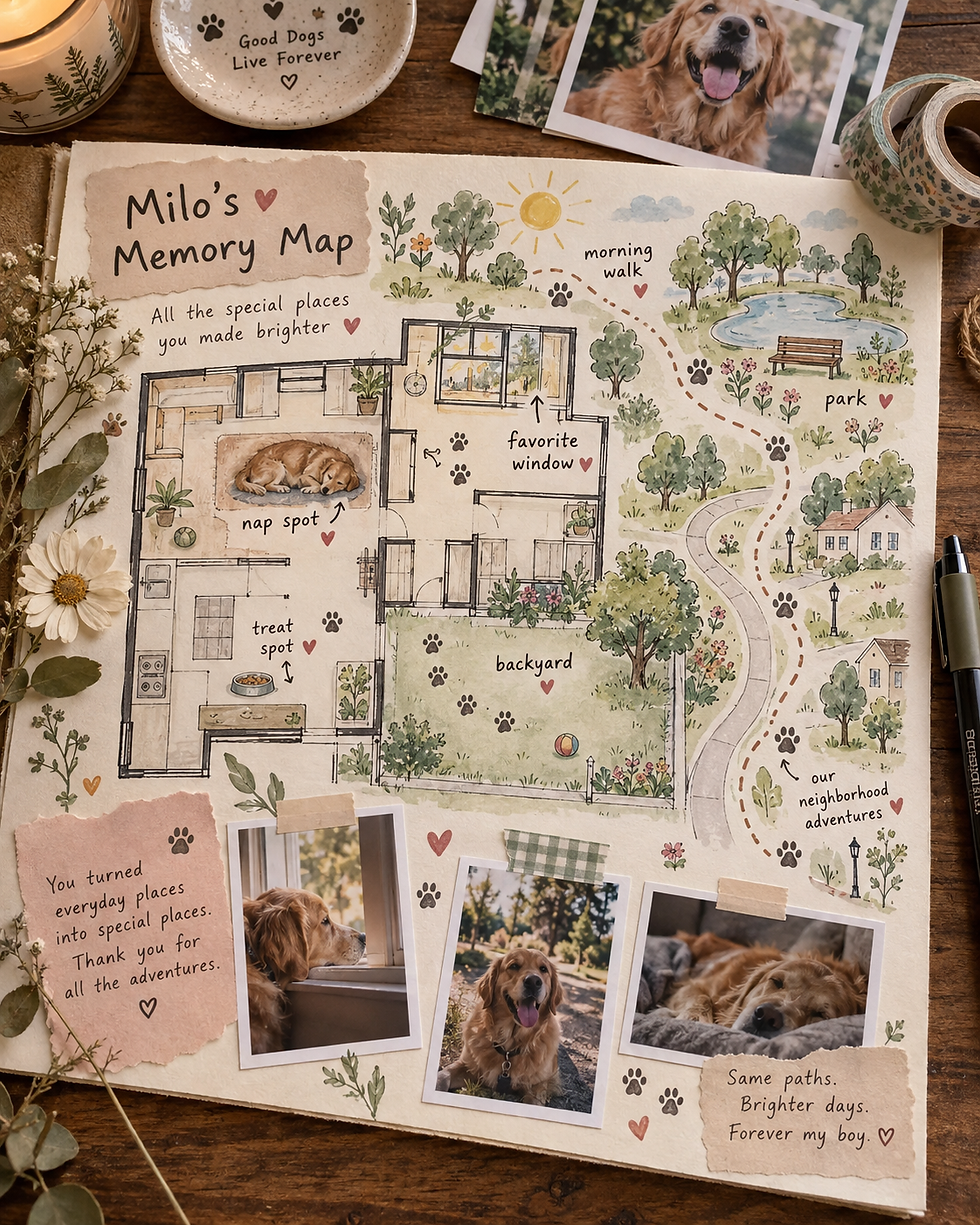
A memory to include: Create a small map of the places that were important in your pet's life.
Mark their favorite walking routes, parks, vacation destinations, or places where you shared special moments.
You can also create a more detailed pet memory map to preserve the locations that were part of your story together.
Chapter 6: The Little Things That Made Them Special
It's often the smallest details that bring back the clearest memories.
The way your pet tilted their head when you spoke. The sound of their nails on the floor. The particular expression they made when they wanted something.
These little characteristics are worth recording because they are so personal.
What was your favorite physical feature, such as their eyes, ears, paws, markings, or expression?
What sounds did they make that you would recognize anywhere?
Did they have a particular way of asking for attention or showing affection?
What was their most recognizable movement, expression, or mannerism?
What tiny detail about your pet would you never want to forget?
A memory to include: Write a list titled "10 Little Things That Made You, You."
Include anything that comes to mind, no matter how ordinary it seems. These details can become some of the most treasured parts of your pet's life story.
Chapter 7: The Bond You Shared
Our pets are present for so many different chapters of our lives.
They may be beside us when we move into a new home, celebrate an important milestone, experience a difficult period, or simply settle into the routines of everyday life.
The relationship we share with them often becomes woven into our own personal history.
When did you first realize how much your pet meant to you?
How did your pet show you affection or let you know they trusted you?
Was there a time when your pet brought you comfort during a difficult experience?
How did your relationship with your pet change or grow over the years?
What do you think made the bond between you and your pet so special?
A memory to include: Write about a moment when you felt particularly close to your pet. It doesn't have to involve a major event. Sometimes, quietly sitting together is the memory that says the most.
Chapter 8: Growing and Changing Together
As the years pass, our pets change, and so do we.
An energetic puppy might become a dog who prefers leisurely walks. A playful kitten might grow into a cat who spends most of the day watching the world from a favorite window.
These changes are part of their story, and they deserve to be remembered.
How did your pet's personality change as they grew older?
What new habits or preferences did they develop over the years?
How did you adapt your routines as their needs changed?
What is one memory that captures a particular stage of their life?
What did caring for your pet teach you about patience, responsibility, or love?
A memory to include: Choose a photograph from different stages of your pet's life and write a short paragraph about each one.
If your pet is still with you, this can also be an opportunity to document their life as it unfolds.

Chapter 9: Celebrating Their Life
Our pets give us so many reasons to celebrate, even if they never understand why we're making such a fuss over them.
Birthdays, adoption anniversaries, holidays, and other special occasions can become wonderful memories.
This chapter is an opportunity to capture those celebrations and the happy moments that surrounded them.
Did you celebrate your pet's birthday or adoption anniversary? What were your favorite traditions?
What is your favorite holiday memory involving your pet?
What is the funniest thing your pet ever did?
What is one accomplishment, milestone, or experience that made you especially proud of them?
If you could choose five photographs that tell the story of your pet's life, which ones would you select, and why?
A memory to include: Create a simple timeline of important moments, such as the day your pet joined your family, their first holiday, favorite adventures, and memorable birthdays.
You can include photographs, dates, and a few sentences about each event.
Chapter 10: Their Lasting Place in Your Heart
This final chapter is about the impact your pet has had on your life and the memories you want to carry forward.
If your pet is still with you, these prompts can help you appreciate your relationship in the present.
If your pet has passed away, they can provide a way to reflect on the love you shared without requiring you to focus on the circumstances of their death.
What are the three most important things your pet taught you?
How did having your pet in your life change you?
What is the one story about your pet that you most want other people to remember?
If you could tell your pet one thing, what would you want them to know?
When you think about your pet's entire life, what do you most want their story to say?
A memory to include: Finish this chapter by writing a letter to your pet.
You might thank them for their companionship, describe your favorite memories, or simply tell them how much they mean to you.
There is no right or wrong way to write this letter. It is a personal expression of the relationship you shared.
A Simple Pet Life Story Journal Template
If answering 50 questions feels like too much, you can start with a shorter version of your pet's story.
Use the following template to create a one-page keepsake or the first page of a longer pet memory journal.
About my pet | What to write |
My pet's name | Their name and favorite nicknames |
Our first day together | When and how they joined your family |
Three words that describe them | Their most memorable personality traits |
Their favorite things | Foods, toys, places, and activities |
Our favorite adventure | A special experience you shared |
A funny memory | Something that still makes you smile |
Our daily ritual | A routine that was special to you |
What they taught me | A lesson you learned from your pet |
My favorite photograph | Why this particular picture is meaningful |
What I always want to remember | The memory or feeling you most want to preserve |
You can complete this page in one sitting or return to it whenever a new memory comes to mind.
How to Turn Your Pet's Memories Into a Life Story Keepsake
Once you've started answering the prompts, you may want to turn your writing into something you can keep and revisit.
There are several ways to create a pet life story keepsake, depending on how much time you want to spend and what feels meaningful to you.
1. Create a Pet Memory Journal
Choose a notebook and dedicate it to your pet's story.
Divide it into chapters, using the sections above as a guide. Leave extra pages between chapters so you can add new memories, photographs, or stories later.
You don't have to write everything chronologically. You might remember a funny story from your pet's younger years while writing about a more recent experience.
Let the journal grow naturally.
2. Make a Pet Memory Scrapbook
If you enjoy hands-on creative projects, combine your journal entries with photographs, drawings, and small keepsakes.
You could include photographs from different stages of your pet's life, paw prints, handwritten notes, or copies of special documents.
Add captions describing what was happening in each photograph and why the moment was important.
A scrapbook is especially meaningful when several family members contribute their own memories.
3. Create a Memory Jar
A memory jar is a simple alternative for anyone who finds a traditional journal overwhelming.
Write individual memories on small pieces of paper, fold them, and place them inside a jar.
Each note might contain a favorite story, a funny habit, something your pet taught you, or a moment you never want to forget.
You can add memories whenever they come to mind and read them whenever you want to revisit your time together.
4. Make a Digital Pet Life Story
If you have a large collection of photographs and videos, consider creating a digital memory book.
Organize photographs chronologically and add short descriptions, journal entries, or stories.
You might even include short videos of your pet playing, sleeping, barking, purring, or enjoying their favorite activities.
These recordings can preserve little details that are difficult to capture in writing alone.
5. Create a Pet Memory Box
A memory box allows you to keep your pet's story and meaningful belongings together.
You might include your completed journal, favorite photographs, a collar, a small toy, or other items that represent your time together.
If you are creating the box after a loss, choose only the belongings you feel comfortable including. There is no need to make decisions about every item right away.
The goal is to create a personal collection of memories that you can return to whenever you wish.
Journaling About a Pet Who Has Passed Away
Writing about a pet after their death can bring up many different emotions.
You might smile while remembering something funny they did and then feel sad when you realize how much you miss them. Some memories may be comforting, while others may feel too difficult to explore right now.
You don't have to force yourself to write through those feelings.
Start with the prompts that feel manageable. Perhaps that means describing your pet's favorite toy, remembering a happy vacation, or writing down five things that always made you laugh.
You can skip questions, leave pages blank, and return to your journal when you're ready.
If you find it difficult to write, try setting aside just five minutes for a single memory.
You might also find comfort in exploring pet loss rituals you can do in five minutes or using a short meditation to create a quiet moment for reflection.
A memory journal does not have to become a record of your grief. It can simply be a place where your pet's life, personality, and the love you shared remain at the center of the story.
Five More Creative Ways to Preserve Your Pet's Story
If you enjoy journaling but want to try something different, here are a few activities that can complement your written memories.
Creative activity | How to preserve the memory |
Create a pet playlist | Choose songs that remind you of your pet or the time you spent together. |
Record a favorite story | Make an audio recording of yourself sharing a memorable experience. |
Make a photo timeline | Select one photograph from each year or important stage of your pet's life. |
Write a list of favorite moments | Record 20 things your pet did that made you smile. |
Create a family memory collection | Ask family members to contribute their favorite stories and photographs. |
You can keep these projects as separate keepsakes or add them to your pet's journal.
The important thing is to choose activities that feel personal and meaningful to you.
Frequently Asked Questions About Pet Memory Journaling
What should I write in a pet memory journal?
Start with your pet's name, how they came into your life, their personality, favorite activities, and your most meaningful experiences together.
You can also include photographs, funny stories, daily routines, and reflections on what your pet has meant to you.
There are no rules about what belongs in a pet memory journal. Anything that helps tell your pet's story is worth including.
Can I create a pet memory journal while my pet is still alive?
Absolutely. In fact, documenting your pet's life while you're still making memories together can be a wonderful way to appreciate the everyday moments.
You can add entries on birthdays, adoption anniversaries, after special outings, or whenever your pet does something you want to remember.
What if I can't remember all the details of my pet's life?
You don't have to remember everything to create a meaningful life story.
Start with the memories you have. Look through old photographs, talk with family members, and think about the routines you shared.
You may find that writing about one experience helps you remember another.
It's also perfectly fine to leave certain details out or acknowledge that you don't remember them.
What if journaling about my pet makes me cry?
It's natural for memories of a beloved pet to bring up strong emotions, particularly after a loss.
You can take breaks, write for shorter periods, or focus on happier memories if that feels more comfortable.
There is no deadline for finishing your journal and no expectation that writing should make you feel a particular way.
How do I make my pet's life story more personal?
Focus on specific details rather than general descriptions.
Instead of simply writing that your dog loved walks, describe how they reacted when you picked up the leash or how they always stopped to investigate the same tree.
Rather than writing that your cat was affectionate, describe how they curled up beside you each evening or tapped your arm when they wanted attention.
These personal details bring your pet's personality to life on the page.
Their Story Is Worth Remembering
Our pets may share only a portion of our lives, but during that time, they become part of so many of our most meaningful moments.
Their stories are made up of both extraordinary experiences and wonderfully ordinary days. The walks you took together. The games you played. The quiet afternoons when they simply wanted to be near you.
A pet memory journal gives those moments a place to live beyond the day they happened.
You don't need perfect words, beautiful handwriting, or a carefully organized scrapbook. You only need to begin with one memory.
Because your pet's life was more than the day you said goodbye. It was every day you shared, every little habit that made you smile, and all the love that became part of your story.
And that is a story worth telling.
Download Your Free Pet Life Story Worksheet
Want a printable version to write on? This free, one-page worksheet brings the ten prompts above together in one place, with space to capture your pet’s personality, favorite things, and memories you want to keep.
Complete it in one sitting or come back whenever a memory comes to mind. You can keep it on its own, tuck it into a memory box, or use it as the first page of your pet memory journal.

Comments